
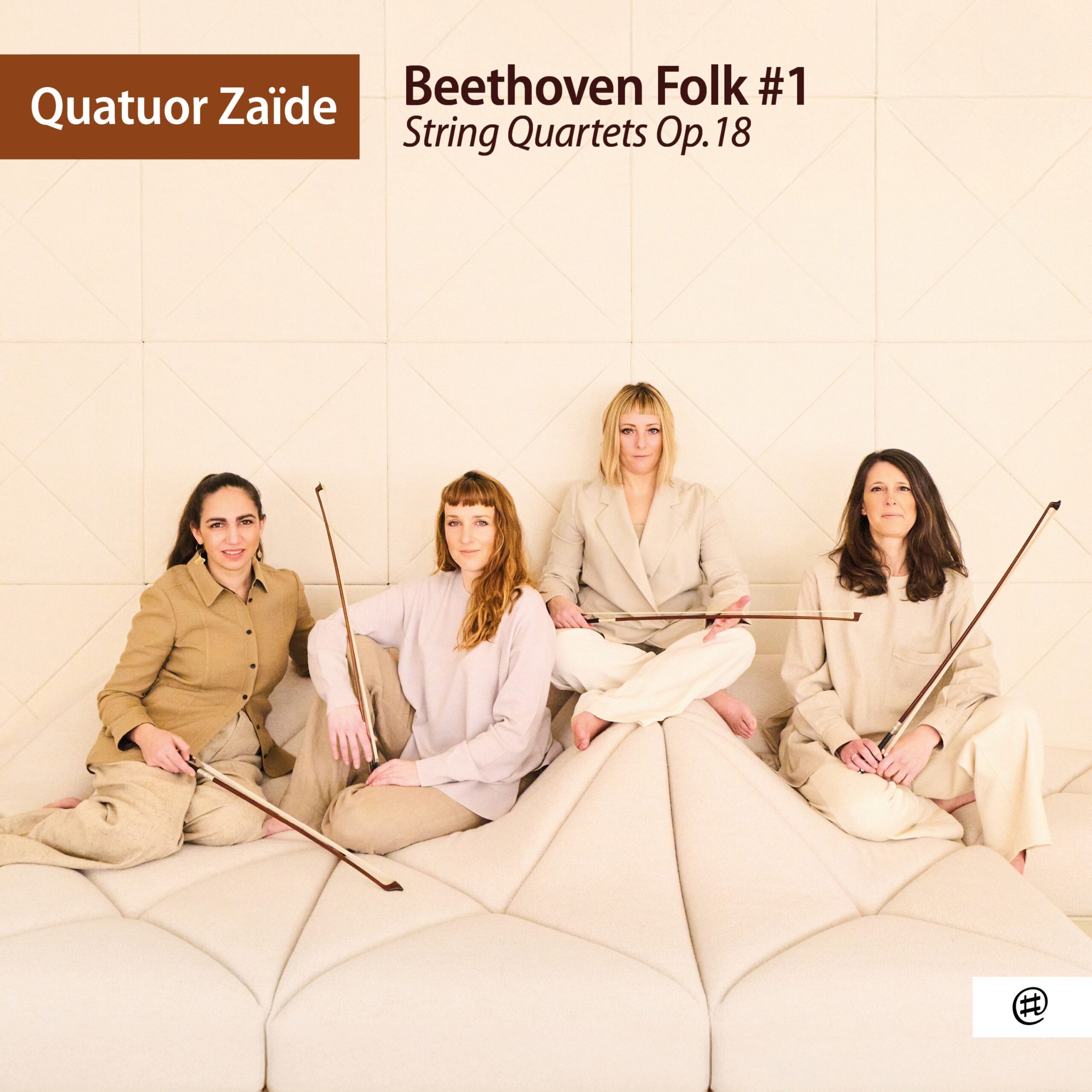
Beethoven Folk #1: String Quartets Op.18
Quatuor Zaïde200 years after Beethoven’s death, the Zaïde Quartet takes on the challenge of performing the complete 16 string quartets with a groundbreaking approach, the fruit of 4 years of research: a reading through the lens of folk music.
Beethoven was passionate about the popular music of his time, and called himself “the link between God and the people”. He arranged more than 200 traditional Irish, Welsh and Scottish tunes. His musical language is steeped in oral traditions from across Europe, and his quartets are no exception: Italian pizzica in the finale of opus 18 no. 1, Gypsy rondo in opus 18 no. 4, Tarantella in opus 18 no. 3, Russian melodies in opus 59 nos. 1 and 2, German dance “alla tedesca” in opus 130…
This approach, at once musicological and creative, has been developed by the Zaïde Quartet in close collaboration with Raphaël Maillet, a violinist specialising in traditional music, and Éric Mouret, arranger. Together, they have identified the folk music that shaped Beethoven’s compositional language. The complete cycle thus alternates between the original quartets and traditional tunes performed in the pure oral tradition — forging living bridges between classical music and popular music.